

Legal Lot vs APN in San Diego County
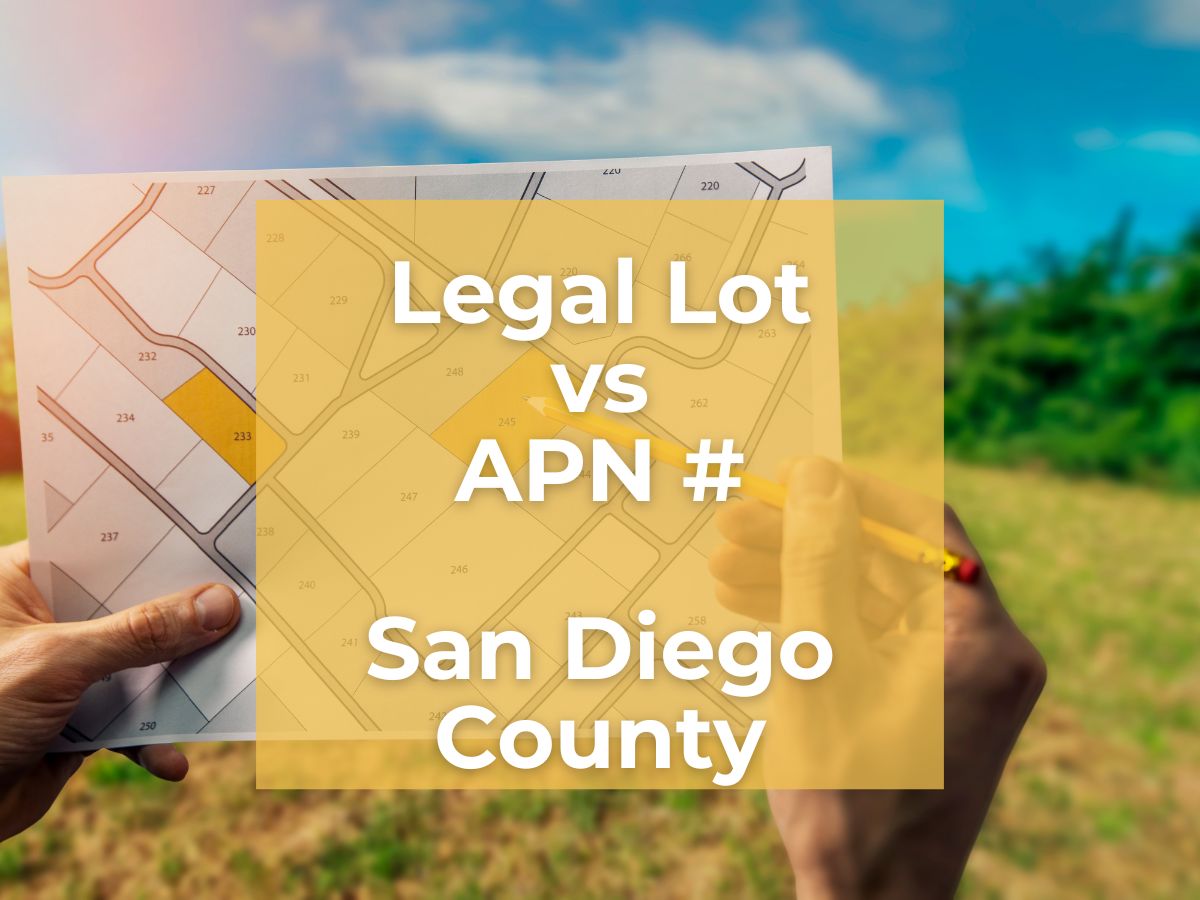
In San Diego County, an APN is just a tax ID—not proof your lot is legal.
Before you buy land or plan a build, make sure the County will actually recognize your parcel.
Another installment in the Guide to Buying Land in San Diego County series · By Rachell Lara, San Diego Realtor specializing in San Diego Land & Rural Property
On this page: What Is an Illegal Lot? · What Is a Legal Lot? · Why 1972 Matters · How to Verify Legal Lot Status · Consequences of Owning an Illegal Lot · Common Remedies · Next Steps if You Already Own a Lot · Thinking About Buying Land?
In San Diego County, not every parcel with an APN is a legal lot.
If you’re thinking about building, adding an ADU, or even just buying land, understanding that difference can save you money, time, and a lot of headaches.
Many property buyers assume that having an Assessor’s Parcel Number (APN) automatically means a lot is legal. In San Diego County, that’s a common misconception. While an APN identifies a parcel for tax purposes, it does not guarantee that the parcel was legally created or is eligible for building permits.
Understanding the distinction between a legal lot and an illegal lot is critical before purchasing land or planning any development.
What Is an Illegal Lot?
Owning an illegal lot doesn’t mean you’re in trouble with the County; it just limits what you can permit or build there until the lot’s status is cleaned up. An illegal lot is a parcel that was created without complying with the California Subdivision Map Act (SMA) or San Diego County subdivision regulations.
Common scenarios include:
- Lots divided by deed after February 1, 1972, without a formal subdivision map or approved lot line adjustment.
- Parcels that do not meet current minimum lot size requirements or other zoning standards.
Why it matters:
- No building permits: The County generally cannot issue permits for homes, garages, ADUs, or other structures on a nonlegal lot.
- Financing and title risks: Lenders and title companies may refuse coverage or flag the property as high-risk, complicating financing, resale, or future development.
What Is a Legal Lot?
A legal lot is a parcel that was created in full compliance with the Subdivision Map Act and San Diego County regulations.
In general, a legal lot:
- Was created through an approved subdivision map, parcel map, or recognized historic division, and
- Meets applicable zoning and minimum lot size requirements.
Rights associated with legal lots:
- Eligible to apply for development permits (subject to zoning, environmental, and other regulations).
- Can typically be sold independently from surrounding parcels.
- Provides a clearer path for lenders, title insurers, and future buyers.
Important: An APN alone does not prove that a lot is legal. Many illegal lots still have APNs assigned so the County can assess property taxes.
Why 1972 Matters: The State Map Act Watershed
San Diego land divisions changed significantly with the State Subdivision Map Act in 1972:
- Pre-February 1, 1972: In some situations, lots could be split by deed (up to four lots) without a formal subdivision map.
- On or after February 1, 1972: New lot creation generally must go through a formal subdivision map, parcel map, or boundary adjustment process approved by the County.
The goal of these rules is to make sure that new lots:
- Meet minimum size and zoning requirements.
- Have legal and practical access.
- Can be served by utilities, septic, and/or water, as required.
Because of this, the date and method a parcel was created are key pieces of evidence when determining whether it is a legal lot.
How to Verify Legal Lot Status
Before you close on a parcel in San Diego County, it’s smart to confirm the lot’s legal status. A practical verification process often includes:
1. Map the parcel and confirm the APN
- Locate the property using the County’s Property Profile, GIS viewer, or parcel maps.
- Make sure the APN, boundaries, and basic description match what’s shown in the listing and in your preliminary title work.
2. Review the title report carefully
- As part of escrow, you’ll receive a title report; this is often where red flags about an illegal or questionably created lot first show up.
- Look for notes about how the parcel was created, references to old subdivision maps or lot line adjustments, and any warnings about Map Act issues.
3. Talk with the County about the property’s history
- When my clients are serious about a piece of land, I encourage them to contact the County before they even write an offer.
- Ask staff to pull the property’s records: septic and well permits and reports, recorded covenants or restrictions, prior maps, and any notes that could limit how the lot can be used.
This information can have a big impact on the property’s value and what you’re willing to pay.
Why do this before you’re in too deep?
A single legal lot can even be made up of several assessor's parcels; the tax maps don't always line up with how the County treats lots for legal and permit purposes.
On rare occasions, improvements like a septic system or well might have been installed without permits, and even when they were permitted, those approvals go through the County's Land and Water Quality Division, which is a separate department and not a building permit. Building permits themselves are handled by the County's Building Division.
Legal lot status, covenants, and access restrictions are often only fully triggered and reviewed when someone applies for a building permit, which is why it's so important to verify legal lot status up front so you don't end up with a property you can't build on—at least not without significant extra time and money.
Consequences of Owning an Illegal Lot
Owning an illegal lot can have serious practical and financial consequences:
- No development permits: The County may not issue permits for homes, additions, ADUs, garages, or other structures.
- Limited financing options: Some lenders may decline to finance improvements or even a purchase secured by an illegal lot.
- Resale challenges: Future buyers and their lenders may walk away once they learn the lot is not legal.
- Costly fixes: Bringing a parcel into compliance can involve legal work, mapping, engineering, and County review fees.
Common Remedies
In some cases, there are ways to bring an illegal lot into compliance or clarify its status. Two of the most common tools are:
Certificate of Compliance (CC)
A Certificate of Compliance is a document issued by the County that confirms a parcel's legal status based on historic deeds, maps, or prior approvals.
A CC can:
- Recognize a parcel as a legal lot if the evidence supports it, or
- Identify conditions that must be met before the lot can be treated as legal.
There are also Conditional Certificates of Compliance that outline required steps or improvements.
Formal Subdivision or Lot Line Adjustment
If deed evidence is insufficient, owners may need to pursue:
- A formal subdivision (such as a parcel map or subdivision map), or
- An approved lot line adjustment.
These processes are designed to ensure the lot meets County standards for:
- Roads and access easements
- Utilities and water
- Septic or sewer solutions
- Zoning and minimum lot size
Depending on how the parcel was created, sometimes the only way to move forward is through a formal subdivision process if the lot doesn't trace back cleanly to an approved map or recognized historic division.
These remedies can take time and money, so it's important to understand them before you buy.
Next Steps if You Already Own a Lot
If you already own land in San Diego County and are unsure whether your parcel is a legal lot, consider:
- Order a detailed title report that traces how your lot was created.
- Consulting with a land-use professional (planner, engineer, or attorney) who can review your deeds, maps, and zoning.
- Asking the County about whether a Certificate of Compliance or other remedy might apply in your situation.
Clarifying legal lot status early can help you plan realistic timelines and budgets for building or improving the property.
Thinking About Buying Land in San Diego County?
Buying rural or semirural land in San Diego County can be exciting, but it's often more complex than buyers expect. Legal lot status, zoning, access, utilities, septic, and fire and environmental regulations can all affect what's actually possible on a property.
If you're considering a parcel in East County or elsewhere in San Diego County, I help buyers evaluate land through the lens of what they want to do there — including checking into legal lot status and connecting with the right professionals when deeper research is needed. From narrowing down parcels to navigating offers, negotiations, inspections, and closing, my goal is to help you avoid surprises and move forward with confidence.
If you'd like to talk through a specific property or your plans for land in San Diego County, you can always reach out and we'll walk through your options together.
-
Categories
- All Blogs (86)
- 55+Communities (4)
- Alpine (26)
- Backcountry (5)
- Community Events (16)
- Farm (3)
- Home Systems (1)
- Land (4)
- Listings (4)
- Manufactured Homes (5)
- Mountain Empire (10)
- Moving to Alpine (10)
- Moving to East County San Diego (11)
- North County (3)
- Ranch (3)
- Real Estate Market Reports (13)
- San Diego (10)
- San Diego Buyer Resources (10)
- San Diego Communities & Neighborhoods (6)
- San Diego Homeowners (7)
- San Diego Service Providers (1)
- Seller Resources (2)
- South Bay (2)
- Strategic Real Estate (2)
- Succulents (1)
Recent Posts
San Diego Incorporated vs. Unincorporated Areas: What Buyers Need to Know

Best of Both Worlds: 4 San Diego Small Towns with Convenience

Manufactured Homes on Land vs. In a Park: Which Is Right for You?

9 Reasons to Consider a 55+ Manufactured Home Community in San Diego

Manufactured vs. Mobile Home: What Is the Real Difference?
The Insider’s Guide to Mobile Home Rent Control in San Diego County
Should You Test for Radon When Buying a Home in San Diego?

Open House in Alpine: Tour 29.5 Acres with Infrastructure | April 18

How to Prepare Your Home for Listing Photos | San Diego Seller Guide
Living in Japatul Valley, Alpine CA: What It’s Really Like

"My job is to empower my clients to confidently make the best real estate decisions for their families!"