

Why San Diego Is Ideal for Boutique Farming
Why San Diego Is Ideal for Boutique Farming
Part of the San Diego Agriculture Series
By Rachell Lara is a San Diego Realtor specializing in the acquisition of San Diego farm land and sustainable, income-producing boutique properties.
The Best Place to Grow is Right Here in San Diego
When people think of San Diego, they usually think of the "postcard" version: the miles of coastline, the military presence, our global biotech hub, or a weekend in Balboa Park. If you’re a local starting to feel the pull of a lifestyle farm, you might be looking at the agricultural "motherland" of California’s Central Valley or even considering an out-of-state move to find the right plot of land.
0But before you pack the boxes, you need to look at what’s happening in your own backyard.
Would you believe that San Diego ranks nationally as a farming mecca?
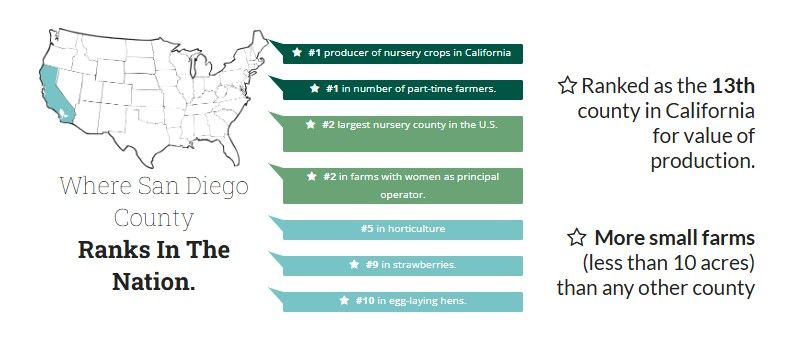
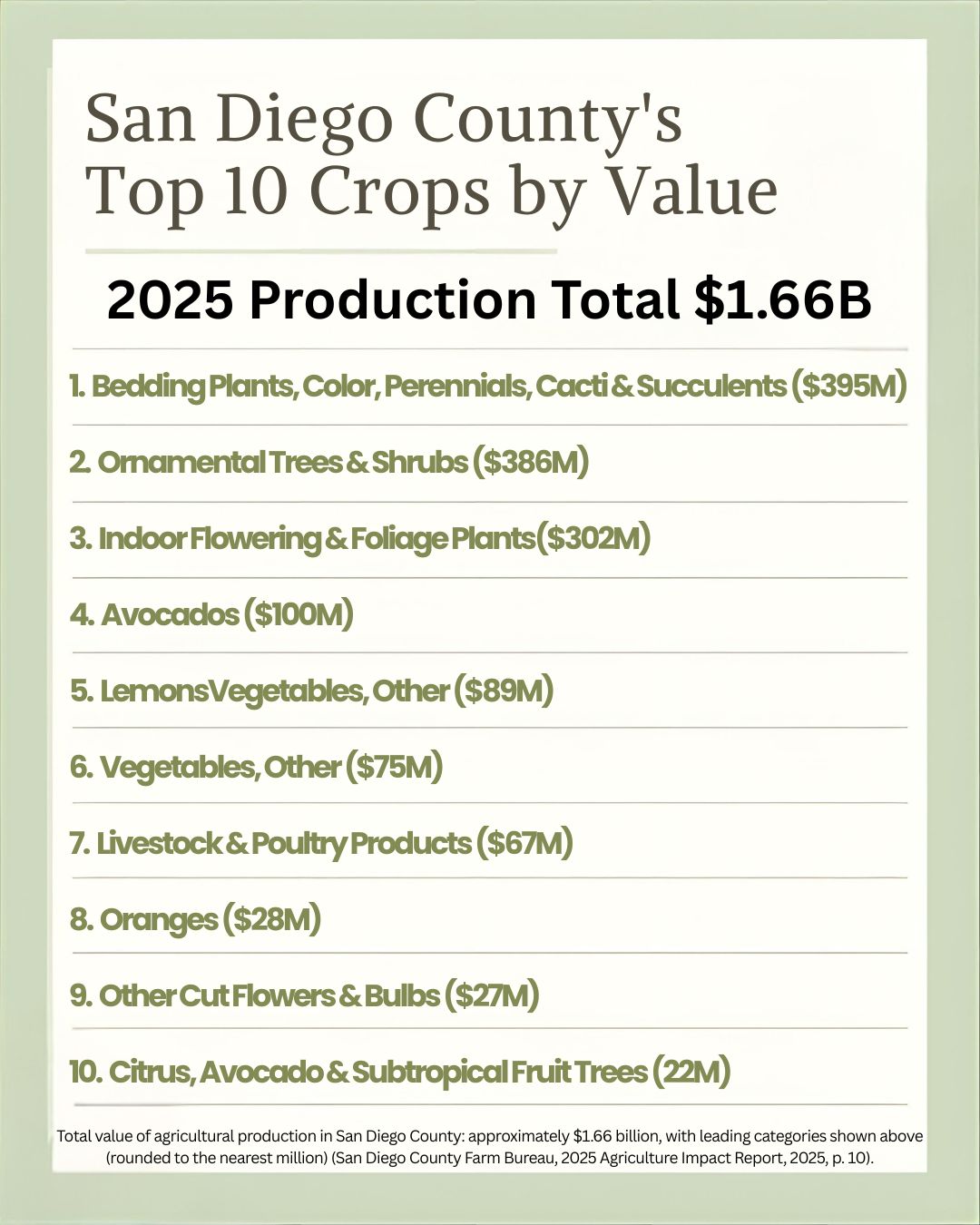
You would be amazed at the sheer scale of what we have going on here. While the rest of the country focuses on massive, industrial acreage, San Diego has quietly become a national leader in niche farming. In fact, San Diego County ranks #1 in the nation for the number of organic producers and leads the state in new and beginning farmers (San Diego County Farm Bureau, 2025, p. 12–13).
Isn't it too expensive to farm in San Diego?
The San Diego farming community took the traditional challenges of the region—expensive land and a lack of water—and applied a heavy dose of innovation. We don’t compete on sheer size; we compete on high-value, high-efficiency boutique operations. This is why San Diego is actually the most logical place for starting a boutique farm; you are investing in an asset that works for you 365 days a year.
Here is why San Diego is actually the most logical place to fulfill your goal of starting a boutique farm.
The San Diego farming community took the traditional challenges of the region—expensive land and a lack of water—and applied a heavy dose of innovation. We don’t compete on sheer size; we compete on high-value, high-efficiency boutique operations. This is why San Diego is actually the most logical place for starting a boutique farm; you are investing in an asset that works for you 365 days a year.
Small Farms Win in San Diego County
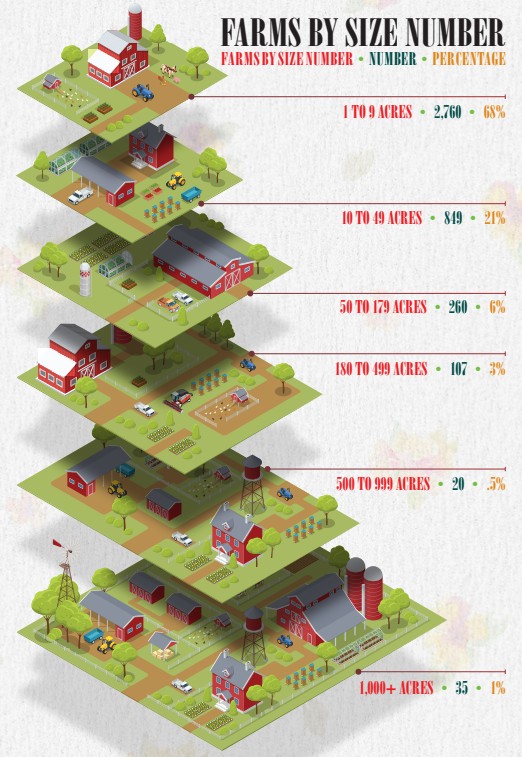
While most people think of the agricultural "motherland" as a place where you need several hundred acres of San Diego farm land just to break even, we play a different game here. We don’t measure our success by the horizon; we measure it by the inch. While the national average farm size is a sprawling 463 acres (USDA NASS, 2024), the average San Diego plot is just 44 acres—and 68% of the farms consist of just 1 to 9 acres (San Diego County Farm Bureau, 2025, p. 11), and they are often more profitable than operations ten times their size.
Bigger Isn't Always Better
In most states, a five-acre plot is dismissed as a "hobby." In San Diego, it is a standard, high-intensity business unit. This shift in scale is exactly why we lead the state in new and beginning farmers. We’ve moved away from the "commodity crop" rat race—where you grow thousands of acres of low-value corn—and toward a model of extreme land productivity. Because 94% of our county’s agricultural value is generated on less than 20% of its farmland, a small plot here isn't a limitation; it's a specialized asset that allows you to out-produce larger farms through sheer intensity.
High-value, High-Margin Crops
The secret to starting a boutique farm in San Diego is focusing on specialty crops that command premium prices. Because land here is a premium resource, local producers lead the nation in high-margin categories like nursery products, floriculture, and organic produce. Instead of competing on raw volume, you are competing on quality and rarity. This strategy is highly effective; a small family operation focusing on niche farming can generate the same financial return that would require a massive industrial footprint elsewhere.
Longer Growing Season
One of the biggest "productivity multipliers" for niche farming in this region is our Mediterranean climate. With nearly 30 distinct microclimates, San Diego supports a true year-round growing season. While farmers in other states are forced into a single harvest cycle followed by months of frozen dormancy, our year-round growing season allows you to remain active and generate revenue through all four seasons. This constant cycle effectively doubles or triples the "utility" of your acreage, making 5 acres in San Diego perform like 15 acres in a colder climate.
A Multitude of Climates in One County
When you're starting a boutique farm in most other places, you're usually stuck with whatever the soil and the local weather dictate—which often means growing exactly what your neighbors grow. Here, our nearly 30 distinct microclimates (San Diego County Farm Bureau, 2025, p. 11) act like a built-in safety net, giving you the freedom to find a "sweet spot" that matches your personal passion and the profit margins you’re looking for.
Why is "commodity flexibility" the key to niche farming?
Because we have so much geographic variety, San Diego produces over 200 different crops — the highest diversity of any county in California (San Diego County Farm Bureau, 2025, p. 11). For a lifestyle farm, this means you aren’t trapped in a single market. If the demand for one crop changes, or if you simply find yourself wanting to try something new, you have the environmental flexibility to pivot your niche farming operation without having to pack up, sell the land, and move somewhere else to find a different climate.
Can you grow high-value specialty items that others can't?
The real beauty of San Diego farm land is the ability to grow high-value items that are rare or even impossible to find elsewhere in the U.S. Because we have frost-free pockets and unique inland soil, boutique owners are successfully growing things they are actually excited about, like Dragon fruit, Macadamia nuts, and Cherimoyas. You aren't just a "grower" of a nameless commodity; you can be a specialist in Protea flowers or rare succulents that industrial farms wouldn't even know how to handle.
San Diego County's Specialty Regions
Finding the right spot is about matching the environment to the daily life you want to lead. If you love the coast, you can focus on strawberries or blueberries near Oceanside. If you want the classic rolling hill aesthetic, the valleys of Fallbrook and Escondido are perfect for citrus and avocados. Or, if you want four seasons and crisp air, the higher elevations in Julian and Ramona give you the "chill hours" needed for wine grapes and stone fruits. You get to choose your backyard first, then your crops.
Diversity Creates Options and Staying Power
By choosing a region with this much variety, you are building a legacy that can grow and change along with your family. If you start with one vision and your interests evolve over a decade, the land stays a versatile asset that can support that change. You are joining a new and beginning farmer community that values this kind of "crop stacking" and innovation. It’s a resilient way to build a life, ensuring that your boutique operation isn't just a business for right now, but a family asset that’s built to last.
Your Market Is Built In
Boutique Doesn’t Mean Small Reach
One of the biggest challenges for small farmers in rural regions is distribution. Growing the crop is one thing — getting it to a paying customer is another.
In San Diego, your customers are already here.
We operate in a rare agricultural-urban interface: working farmland positioned just minutes from a metropolitan population of 3.3 million people (San Diego County Farm Bureau, 2025, p. 22). That proximity changes everything. It makes direct-to-consumer sales not just possible — but practical.
You’re not shipping across the country hoping for margin. You’re selling to neighbors who actively seek out local, high-quality food.
Farmers Markets, CSA Boxes & Restaurant Buyers
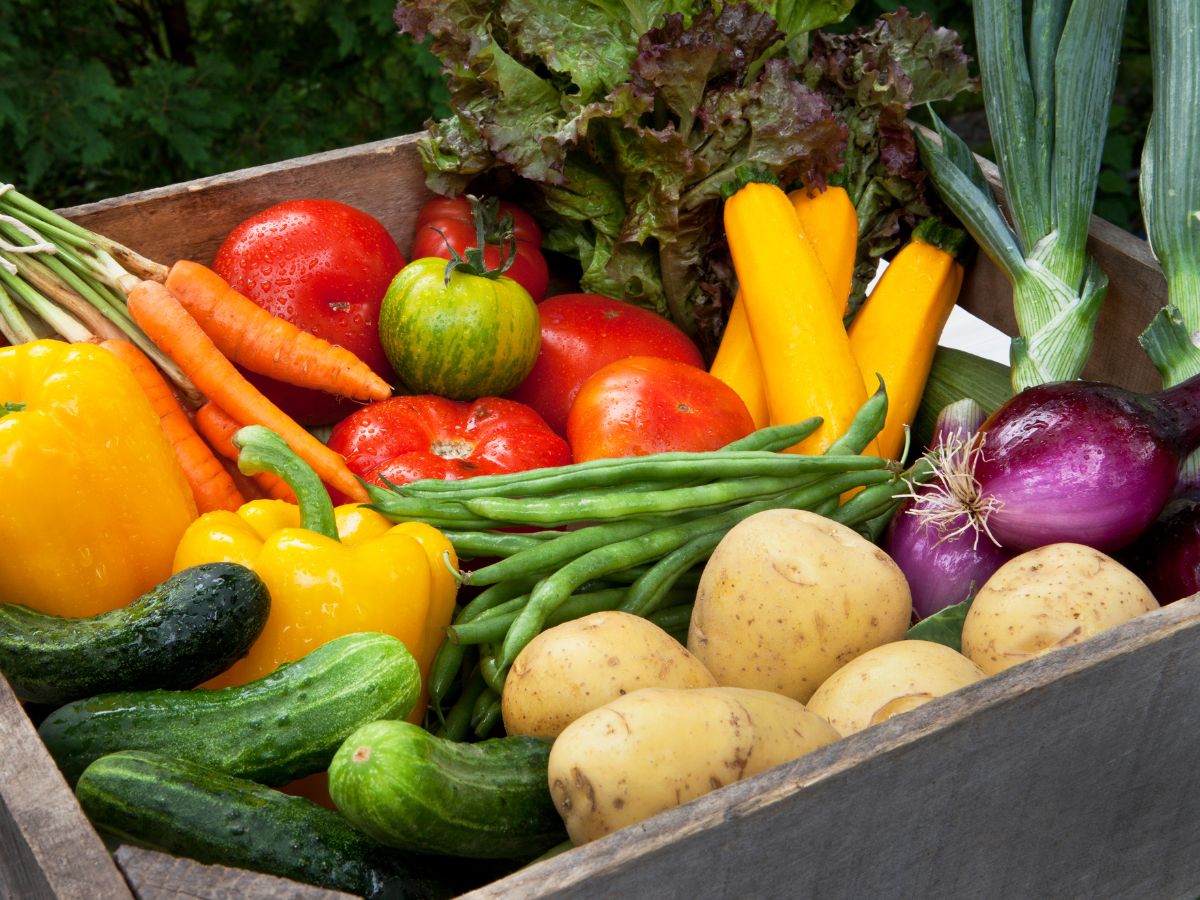
San Diego County supports more than 40 certified farmers' markets operating throughout the week (San Diego County Farm Bureau, 2025, p. 22).
That gives boutique growers consistent, recurring points of sale.
Beyond markets, many small farms here build revenue through:
- CSA (Community Supported Agriculture) subscription boxes
- Direct restaurant partnerships
- Farm stands and on-site sales
- Specialty nursery and ornamental plant sales
Because the population density is high — and consumer demand for local goods is strong — farms are able to stack multiple direct sales channels instead of relying on a single wholesale buyer.
There’s a misconception that boutique farming limits you to your immediate zip code.
The data says otherwise.
In 2024, the County of San Diego Department of Agriculture, Weights & Measures certified 10,892 shipments of plant material to 37 countries (San Diego County AWM, 2024, p. 20).
Of those shipments:
- 85% went to Mexico
- 8% went to Canada
- Additional trade reached Europe, South America, Central America, Africa, and the Caribbean
Domestically, top export states included:
- Texas
- Arizona
- Florida
Top certified export commodities included:
- Ornamental trees & shrubs (686 certificates)
- Cacti & succulents (128 certificates)
- Bedding plants, color, and perennials (86 certificates)
This means you can build your foundation on a strong local market — and still scale into interstate or international trade if your niche supports it.
Local stability. Global optionality.
Revenue Stacking Through Agritourism
Because tourism is one of San Diego’s largest economic drivers, boutique farms here often expand beyond crops.
Agritourism allows owners to diversify income while increasing brand value. Examples include:
- U-pick events
- Educational workshops
- Farm dinners
- On-site experiences
- Short-term farm stays
You’re not just selling produce — you’re selling connection.
And in a region where lifestyle and experience matter, that can be a powerful differentiator.
You Don't Have to Move to the Middle of Nowhere
Starting a boutique farm in San Diego doesn’t mean leaving behind the life you love. You can stay connected to schools, shopping, and the community while enjoying the open space, quiet, and hands-on lifestyle of a farm. Many new boutique farmers here are professionals making a deliberate shift — trading long commutes and office stress for mornings in the field, afternoons with family, and evenings watching the sunset over their land.
I’ve seen more than one person make the move out of state, chasing what they thought would be a simpler, idyllic farm life — and they regretted it. The biggest challenge? Weather. As San Diego natives, we forget how long winter can last in other parts of the country, or how persistent humidity, frost, and other climate challenges can affect both crops and daily life. Even San Diego transplants underestimate how San Diego has softened them for other places.
And then there’s the long-term impact on property. Spending even a few years elsewhere can make it hard to return — especially because San Diego property values, tend to appreciate faster than most other regions. Choosing to stay local means you’re not just investing in a lifestyle; you’re protecting your long-term financial position while enjoying the environment you already know and love.
By staying local, you’re not only protecting your lifestyle and investment — you’re choosing a community and climate you already understand, without the surprises of a long-distance relocation
There is Real Support for Farmers in San Diego
San Diego’s local government supports boutique farming through specific programs and financial incentives that recognize growers as a top economic driver.
In many parts of California, it can feel like the government is at odds with agriculture. In San Diego, the narrative is different. The county recognizes that farmers are the original environmentalists and a top economic driver. Agriculture ranks as the 4th largest industry in San Diego County (San Diego County Farm Bureau, 2025, p. 10). Because of this, they have built specific programs to ensure your boutique farm isn't just "permitted," but encouraged to thrive.
Government Financial Assistance Programs
The county’s flagship program for high-value land preservation is the Purchase of Agricultural Conservation Easement (PACE) Program. Rather than just hoping you stay in business, the government is willing to pay you for your commitment to the land.
Under the PACE Program, willing property owners are compensated for placing a perpetual easement on their property that limits future uses to agriculture. This provides you with a direct cash infusion to reinvest in your infrastructure while ensuring the land remains an agricultural asset forever. To participate, you generally need to have been in active production for two years on land zoned A70 (Limited Agriculture) or A72 (General Agriculture)(County of San Diego PACE Guidelines, 2021).
Can you actually "farm" on a standard city lot?
Yes, you can build a professional farming operation right in the heart of the city thanks to San Diego’s Urban Agriculture Incentive Zone (UAIZ). While most people associate farming with the open countryside, this specific program was designed to encourage professional agriculture on small, unimproved parcels ranging from just 0.1 to 3 acres(City of San Diego UAIZ Program). This means a standard vacant city lot isn't just a patch of dirt—it’s a potential tax-advantaged business site.
The UAIZ program allows your property to be reassessed based on lower agricultural land values, leading to a significant property tax reduction. To qualify, property owners must commit to using the urban plot for professional crop production for at least five years.
By lowering the tax barrier, the county proactively encourages "growers" over "developers." This isn't just a financial win; it’s an environmental one. These urban plots contribute to the county's Climate Action Plan by helping sequester carbon.
San Diego County Farm Bureau
The San Diego County Farm Bureau serves as a collaborative hub where the wisdom of generational growers and the energy of new boutique producers merge to ensure everyone can "grow" together. Rather than leaving you to figure it out alone, the Bureau provides the infrastructure for a shared success model. While many assume the Farm Bureau is a government agency, it is actually a grass-roots, non-profit organization made up of 1,200 members (San Diego County Farm Bureau, 2025, p. 21) who ensure that new farmers don't have to navigate the transition from corporate life to the field alone.
Navigate the Learning Curve?
The Bureau acts as the "connective tissue" of the industry, offering training, networking, and task forces that allow small farmers to solve large-scale problems collectively. For a boutique owner, the most daunting part of the "learning curve" is often the regulatory environment. The Farm Bureau provides groups like the Irrigated Lands Group, where growers work together to comply with clean water regulations, turning an expensive and complex legal hurdle into a manageable, shared effort.
What is "SD Grown"?
The SD Grown program (formerly San Diego 365) is a high-visibility marketing initiative that connects your boutique farm directly to a community of "Friends of Farming" and local consumers. In a county with 3.3 million people, the biggest challenge isn't finding customers—it's standing out. By utilizing the SD Grown brand, you are immediately identified as a trusted local producer, tapping into a consumer base that is hungry for food produced, grown, or raised close to home.
Creating a Legacy
Yes, San Diego actively supports a multi-generational future through programs like Ag in the Classroom and dedicated agricultural scholarships. If you are leaving the corporate world to reclaim time with your children, you’ll find that the community invests heavily in their agricultural literacy. The Ag in the Classroom program ensures that farming remains a respected and understood career path in local schools. The Education Foundation has awarded over $533,000 in scholarships since 1999 (San Diego County Farm Bureau, 2025, p. 25) to help the next generation pursue degrees in ag-science and business.
Benefits of Membership
Membership in the Farm Bureau provides you with a seat at the table where public policy is shaped, ensuring that the rules favor small, family-owned operations over industrial interests. Beyond advocacy, you gain access to an industry expo, farm tours, and networking forums that bring stakeholders together. Your shift to farming isn't just a career change; it’s the start of a supported family legacy where the Bureau monitors every level of government so you can focus on actually farming.
What Are the Immediate Next Steps?
The “San Diego Dream” of farming is available now, and the first step is to engage with the organizations and tools designed to help you transition. You don’t have to wait for “someday” or move out of state to reclaim your life.
- Connect with the San Diego County Farm Bureau to find local mentors.
- Use the County Self-Service Portal to identify land with the right zoning and PACE eligibility.
By taking these steps, you’re not just starting a farm — you’re stepping into a lifestyle that balances productivity, family, and connection to the land you already love.
Works Cited
- California Department of Food and Agriculture (CDFA). "2023-2024 California Agricultural Statistics Review." https://www.cdfa.ca.gov/Statistics/PDFs/2023-2024_california_agricultural_statistics_review.pdf?utm_source=chatgpt.com
- California Department of Conservation. "Williamson Act Program: About the Williamson Act and FAQ." https://www.conservation.ca.gov/dlrp/wa?utm_source=chatgpt.com
- California Grown. "19 Crops That Are Grown Only in California." https://californiagrown.org/blog/only-in-california/?utm_source=chatgpt.com
- City of San Diego. "Urban Agriculture Incentive Zone (UAIZ): 10 Steps to Starting Your Contract." https://www.sandiego.gov/economic-development/business/starting/urban-agriculture?utm_source=chatgpt.com
- County of San Diego. "Agricultural and Forestry Resources." (August 2013). https://www.sandiegocounty.gov/content/dam/sdc/pds/advance/Equine/FEIR/02_2_Agricultural_and_Forestry_Resources.pdf
- County of San Diego Department of Agriculture, Weights and Measures (AWM). "2024 San Diego County Crop Statistics and Annual Report." https://www.sandiegocounty.gov/awm/crop_statistics.html?utm_source=chatgpt.com
- County of San Diego Department of Agriculture, Weights and Measures (AWM). "2023 San Diego County Crop Statistics and Annual Report." https://www.sandiegocounty.gov/content/dam/sdc/awm/docs/AWM%202023%20Crop%20Annual%20Report%20(Single%20Spread%20Pages%20Optimized).pdf
- County of San Diego Planning & Development Services. "Zoning Ordinance Summary." https://www.sandiegocounty.gov/content/dam/sdc/pds/zoning/formfields/PDS-444.pdf#:~:text=They%20are%20represented%20by%20letters%20and%20numbers%2C,(A
- County of San Diego. "San Diego County Zoning Ordinance (Selected Schedules and Sections)." https://www.sandiegocounty.gov/content/dam/sdc/pds/advance/Agriculture/DEIR/031517AgPromoOrdinance.pdf
- County of San Diego. "Pace Guideline 2021." https://www.sandiegocounty.gov/content/dam/sdc/pds/advance/PACE/PACE-Guidelines-2021.pdf
- County of San Diego. "Purchase of Agricultural Conservation Easement (PACE) Program Guidelines." https://www.sandiegocounty.gov/content/sdc/pds/advance/PACE.html
- Grassfed Life Podcast. "A Guide to Starting A Farm Based Business – From LLCs to Insurance to Permits." https://grassfedlife.co/2018/03/12/llcs-insurance-permits-and-regulations-a-guide-to-forming-a-farm-based-business/
- San Diego County Farm Bureau. "2025 Agriculture Impact Report." https://www.sdfarmbureau.org/wp-content/uploads/2025/06/Farm-Bureau-Impact-Report-2025-06-11-compressed.pdf
- USDA National Agricultural Statistics Service (NASS). "2024 State Agriculture Overview for California." https://www.nass.usda.gov/Quick_Stats/Ag_Overview/stateOverview.php?state=CALIFORNIA
Categories
- All Blogs (86)
- 55+Communities (4)
- Alpine (26)
- Backcountry (5)
- Community Events (16)
- Farm (3)
- Home Systems (1)
- Land (4)
- Listings (4)
- Manufactured Homes (5)
- Mountain Empire (10)
- Moving to Alpine (10)
- Moving to East County San Diego (11)
- North County (3)
- Ranch (3)
- Real Estate Market Reports (13)
- San Diego (10)
- San Diego Buyer Resources (10)
- San Diego Communities & Neighborhoods (6)
- San Diego Homeowners (7)
- San Diego Service Providers (1)
- Seller Resources (2)
- South Bay (2)
- Strategic Real Estate (2)
- Succulents (1)
Recent Posts
San Diego Incorporated vs. Unincorporated Areas: What Buyers Need to Know
Best of Both Worlds: 4 San Diego Small Towns with Convenience
Manufactured Homes on Land vs. In a Park: Which Is Right for You?

9 Reasons to Consider a 55+ Manufactured Home Community in San Diego

Manufactured vs. Mobile Home: What Is the Real Difference?
The Insider’s Guide to Mobile Home Rent Control in San Diego County

Should You Test for Radon When Buying a Home in San Diego?
Open House in Alpine: Tour 29.5 Acres with Infrastructure | April 18

How to Prepare Your Home for Listing Photos | San Diego Seller Guide
Living in Japatul Valley, Alpine CA: What It’s Really Like
"My job is to empower my clients to confidently make the best real estate decisions for their families!"