

Succulent Showcase: Mardi Gras Aeonium
Succulent Showcase: Mardi Gras Aeonium
Discovering the Vibrant Mardi Gras Aeonium

Mardi Gras Aeonium Plant
Imagine a plant that captures the spirit of one of the most colorful, vibrant festivals on earth – the Mardi Gras. That's exactly what the Mardi Gras Aeonium does with its festive appearance and lively personality.
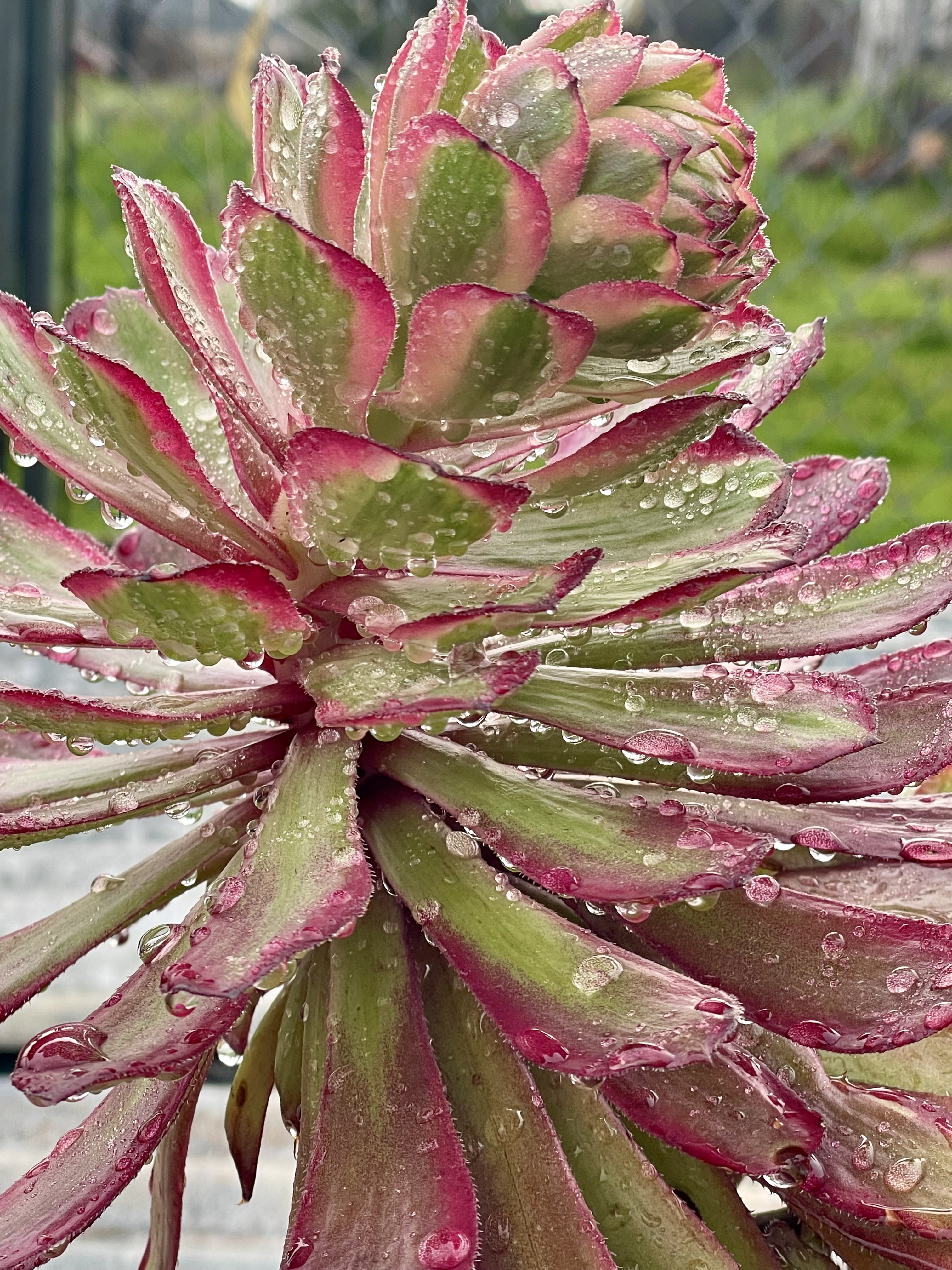
The Mardi Gras Aeonium, scientifically known as Aeonium arboreum 'Mardi Gras,' is a striking succulent that boasts variegated foliage. Its spoon-shaped leaves feature a mesmerizing combination of green, pink, and creamy white tones, creating a visual masterpiece reminiscent of the lively celebration it's named after. The compact rosettes form dense clusters, giving the plant a bushy and dynamic appearance.
This striking plant belongs to the Crassulaceae family and the Aeonium genus.
Native Regions and Natural Habitat for the Aeonium
While the Mardi Gras Aeonium itself is cultivated, Aeoniums are native to the Canary Islands, Madeira, and Eastern Africa where they thrive in a Mediterranean climate.
Plant Appearance
Color(s), Shape
The Mardi Gras Aeonium boasts rosettes that blend shades of green, yellow, and deep purple-red, much like the beads thrown during the iconic festival. Its leaves are spoon-shaped, adding to its unique structure. The compact rosettes form dense clusters, giving the plant a bushy and dynamic appearance.
Flowers
Rarely, it may produce small, star-shaped flowers that add to its ornamental value.
Size Height and Spread
Typically, this succulent grows to be about 18 inches tall and can spread out to around 24 inches wide.
Gets Confused With
It's often mistaken for its relatives, like the
Aeonium 'Pink Witch', due to their similar rosette shapes and coloration.
How to Care for Mardi Gras Aeonium:
For those looking to cultivate this captivating succulent, the good news is that the Mardi Gras Aeonium is relatively low-maintenance. Here are some essential care tips:
- Sunlight: Provide the Mardi Gras Aeonium with bright, indirect sunlight. Here in southern California while it can tolerate some direct sunlight. it's best to shield it from intense afternoon rays in the summertime. I like to keep it in a pot that I can relocate during the summer heat.
- Soil: Ensure well-draining soil, as these succulents dislike sitting in waterlogged conditions. A mix formulated for cacti and succulents works well.
- Watering: Allow the soil to dry out between waterings. Overwatering is a common pitfall, so err on the side of caution and let the soil dry before giving it a good soak.
- Temperature: Mardi Gras Aeonium thrives in moderate temperatures. Protect it from extreme cold, especially during winter, as it is not frost-tolerant.
- Fertilize: Feed it with a balanced, water-soluble fertilizer designed for succulents during the growing season (fall and spring).
Common Issues for Aeonium Mardi Gras
Watch out for overwatering, pests like aphids, and ensure it doesn't get too cold.
Growth
Aeonium Mardi Gras Growth Habits, Shape, Rate, Rate of Offsets
This Aeonium grows upright with a moderate rate and produces offsets occasionally.
Growing Season
Spring and fall are the prime growing seasons for the Mardi Gras Aeonium.
When Dormant
It becomes dormant in extreme summer heat and winter cold.
When it Blooms
Blooming is rare but can occur in late spring to early summer if conditions are right.
How to Prune
Remove dead or damaged leaves and prune sparingly to maintain shape.
Ways to Propagate
Propagation is easy through stem cuttings or by separating offsets.
How to Use
Spiller, Filler, or Thriller
It serves as a 'thriller' in container arrangements with its dramatic colors.
Landscape Applications
In suitable climates, it can be a stunning ground cover or rock garden feature.
Pots & Containers
Perfect for decorative pots and containers.
Outdoors
It makes a bold statement in outdoor succulent gardens.
Can it go inside?
Absolutely! It's an excellent indoor plant provided it gets enough light.
Repotting
Repot every two to three years or when it outgrows its container.
Great Plants to Pair Mardi Gras Aeonium With
Pair with other succulents like Sedum or Echeveria for contrasting textures.
Why Would You Want to Choose Mardi Gras Aeonium
Its year-round vibrant foliage sets it apart from other plants and requires minimal care.
Fun Facts
Did you know that the Mardi Gras Aeonium's leaves can change intensity based on the amount of sunlight it receives?
Conclusion
The Mardi Gras Aeonium is a low-maintenance, visually striking plant that brings a touch of festivity wherever it grows. Whether you're a seasoned gardener or a novice looking to add some zest to your collection, this succulent is a fantastic choice. We encourage you to share your experiences and questions about this vibrant plant in the comments below. Let's grow our gardening community with each shared story of these beautiful plants!
Mardi Gras Aeonium Frequently Asked Questions
Is it poisonous? Toxic?
No, the Mardi Gras Aeonium is not known to be toxic.
Is it medicinal?
There are no widely recognized medicinal uses for this plant.
Monocarpic
Yes, like many other aeonims, this species is monocarpic, meaning they die after flowering, but this variety rarely blooms.
Is it considered invasive?
No, it is not considered invasive.
Is it a hybrid?
Yes, the Mardi Gras Aeonium is a hybrid plant.
Average Cost to Purchase
Expect to pay anywhere from $5 to $20 depending on the size. You can find them at specialty nurseries or online retailers.
Categories
- All Blogs (86)
- 55+Communities (4)
- Alpine (26)
- Backcountry (5)
- Community Events (16)
- Farm (3)
- Home Systems (1)
- Land (4)
- Listings (4)
- Manufactured Homes (5)
- Mountain Empire (10)
- Moving to Alpine (10)
- Moving to East County San Diego (11)
- North County (3)
- Ranch (3)
- Real Estate Market Reports (13)
- San Diego (10)
- San Diego Buyer Resources (10)
- San Diego Communities & Neighborhoods (6)
- San Diego Homeowners (7)
- San Diego Service Providers (1)
- Seller Resources (2)
- South Bay (2)
- Strategic Real Estate (2)
- Succulents (1)
Recent Posts

San Diego Incorporated vs. Unincorporated Areas: What Buyers Need to Know

Best of Both Worlds: 4 San Diego Small Towns with Convenience

Manufactured Homes on Land vs. In a Park: Which Is Right for You?

9 Reasons to Consider a 55+ Manufactured Home Community in San Diego

Manufactured vs. Mobile Home: What Is the Real Difference?

The Insider’s Guide to Mobile Home Rent Control in San Diego County
Should You Test for Radon When Buying a Home in San Diego?

Open House in Alpine: Tour 29.5 Acres with Infrastructure | April 18

How to Prepare Your Home for Listing Photos | San Diego Seller Guide
Living in Japatul Valley, Alpine CA: What It’s Really Like

"My job is to empower my clients to confidently make the best real estate decisions for their families!"