

San Diego County Approves Tiny Home Living on Land
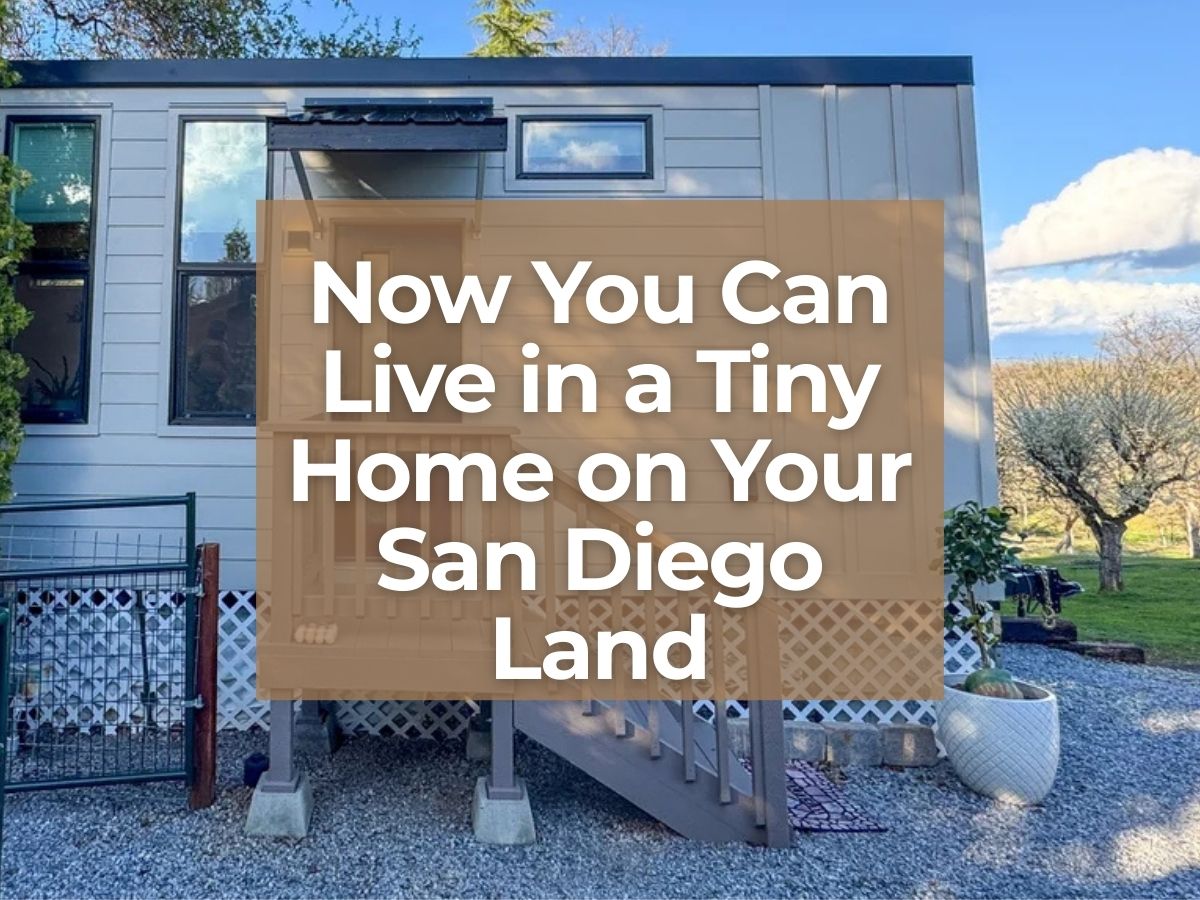
For years, living in a Tiny Home on Wheels (THOW) in San Diego County was a legal gray area—but that has finally changed.
In a landmark move, San Diego County has officially recognized THOWs as legal dwellings in unincorporated areas, providing a major win for affordable housing.
Strategic Real Estate Series · By Rachell Lara, San Diego Realtor specializing in ranch, land, and creative housing solutions.
On this page: A Historic Shift · THOW vs. Standard RV · Certification & Safety Standards · Placement & Setback Rules · Utility Requirements · How to Get Started
For years, the answer to a common question in San Diego County was always no:
- Can I buy land and live in an RV?
- Can I buy land and live in a camper or mobile home?
- Can I buy land and live in a tiny home?
No matter what the temporary structure looked like, the County's answer was the same. That finally changed in late 2025.
A Historic Shift for San Diego Housing
As of late 2025, San Diego County made history by adding Tiny Homes on Wheels (THOWs) to the approved housing options for unincorporated areas. Previously, these structures were often treated like RVs—legal to park, but illegal to inhabit full-time on private land. Under the new determination, a THOW can now serve as a primary residence or a legal Accessory Dwelling Unit (ADU) alongside an existing home.
This decision is part of the County’s "Housing Blueprint" to address the regional housing shortage. By providing clear permitting standards, the County has removed the "guessing games" for homeowners looking to add flexible living space for family members or renters.
The Difference Between a THOW and a Standard RV
It is important to understand that not every "home on wheels" qualifies under this new ordinance. While they look similar, the County draws a firm line between a recreational vehicle and a Movable Tiny House:
- Permanent Habitability: THOWs are built for long-term living, whereas RVs are built for temporary travel and camping.
- Size Limits: To qualify, the unit must be between 150 and 430 square feet (excluding lofts).
- 1 Story: A loft is permitted if it is less than 150 square feet allowed
- No Extensions: Unlike many RVs, a legal THOW cannot have slide-outs or pop-out features that increase the habitable square footage.
Critical Certification & Safety Standards
To be recognized as a legal dwelling, your tiny home must meet strict building and fire safety requirements. This is where many DIY or "budget" builds fail to qualify.
The ANSI A119.5 Requirement
Your THOW must have a certification sticker showing it was built to **ANSI A119.5 standards** by a qualified third-party inspector. Without this, the County will not issue a permit for permanent habitation.
Fire Safety (High Fire Risk Compliance)
Because much of San Diego County is in fire-prone territory, the unit must include:
- Ignition-resistant exterior materials (stucco, masonry, or cement fiber board).
- Class A roofing and dual-glazed tempered windows.
- Residential fire sprinkler systems (in most cases).
Placement and Setback Rules
You can’t just park a tiny home anywhere on your lot. The County requires:
- Paved Pad: The unit must be parked on a paved pad (concrete or asphalt) with bumper guards or curbs to prevent movement.
- Setbacks: It must be located at least 6 feet from any other structures and 5 feet from property lines.
- Concealed Undercarriage: Once sited, the wheels, hitch, and chassis must be screened from view to maintain a residential aesthetic.
Utility Connections & Permitting
A legal THOW is not "off-grid" in the eyes of the County. It must function like a traditional house regarding infrastructure:
Water and Sewer
The unit must be connected to an approved water supply and a legal sewer or septic system. If you have an existing septic tank, a professional must certify that it has the capacity to handle the additional "bedroom" represented by the tiny home.
Electrical Service
Power must be extended from the main electrical panel in compliance with the California Electrical Code. This requires a building permit to ensure the connection is safe and properly grounded.
How to Get Started
The path to tiny home living in San Diego is now clearer than ever, but the permitting process is still detailed. Before you purchase a unit, I recommend:
- Confirming Your Jurisdiction: Ensure your property is in an unincorporated area (like Alpine, Ramona, or Fallbrook). Check San Diego County's page, San Diego County Areas Served, to see if you live in an unincorporated area.
- Checking Builder Legitimacy: Verify your builder provides the ANSI certification and meets California's ignition-resistant standards.
- Consulting the ADU Handbook: Review the San Diego County ADU Guidelines for the most up-to-date fee information.
If you are looking for land that is "Tiny Home ready" or need a referral to a builder who specializes in San Diego-compliant units, reach out today. I help my clients navigate the zoning and infrastructure hurdles so they can build wealth and living space with confidence.
Categories
- All Blogs (86)
- 55+Communities (4)
- Alpine (26)
- Backcountry (5)
- Community Events (16)
- Farm (3)
- Home Systems (1)
- Land (4)
- Listings (4)
- Manufactured Homes (5)
- Mountain Empire (10)
- Moving to Alpine (10)
- Moving to East County San Diego (11)
- North County (3)
- Ranch (3)
- Real Estate Market Reports (13)
- San Diego (10)
- San Diego Buyer Resources (10)
- San Diego Communities & Neighborhoods (6)
- San Diego Homeowners (7)
- San Diego Service Providers (1)
- Seller Resources (2)
- South Bay (2)
- Strategic Real Estate (2)
- Succulents (1)
Recent Posts





"My job is to empower my clients to confidently make the best real estate decisions for their families!"